Northern Lights over the Arctic Meridian

12 Feb –
21 Feb 2027
This 10-day journey moves from the maritime elegance of Stockholm to the high Arctic interior of Kiruna and the vertical coastline of Norway. Flexible Northern Lights Hunting designed for the culturally curious South African traveller.

What to expect

Itinerary

Day 1
The Transit North

Your journey begins with an overnight flight departing from Johannesburg. This is the period of transition; leaving the South African summer behind as we head toward the high latitudes of the Swedish winter. Use this time to rest and shift gears. The tropics are behind you, and the Arctic awaits.

Day 2
Stockholm: Archipelagos and Ironwood

We start in Stockholm, a city composed of fourteen islands where the brackish Baltic meets the freshwater of Lake Mälaren. Upon arrival at Arlanda, we head into the city via private transfer. Stockholm in February is a study in muted tones; the water is a deep slate grey, and the city’s ochre and terracotta facades provide a warm counterpoint to the winter light.

The afternoon is spent in Gamla Stan, the Old Town, where the narrow alleys and gabled buildings have remained largely unchanged for centuries. We view the Royal Palace and the Cathedral, listening to the stories that define the Swedish monarchy. We visit the Vasa Museum to stand before the 17th-century warship that sank on its maiden voyage in 1628. Raised after 333 years on the seabed, its preservation is startling; offering a tangible, sobering look at the hubris and ambition of the Swedish Empire at its peak. The evening concludes with a three-course dinner at the Haymarket; a hotel that occupies the former PUB department store, the same building where Greta Garbo once worked, offering a refined Art Deco atmosphere for our first night in the north.

Day 3
Stockholm to Kiruna: The Subterranean Engineering

A morning transfer to Arlanda marks our departure for Kiruna, crossing into the Arctic Circle. This is a region defined by its vastness and the industrial pulse of the LKAB iron ore mine. We spend the afternoon exploring this subterranean world, descending 540 metres into the earth via a dedicated road. This is a sophisticated visitor centre where the scale of the operation is demonstrated; we learn about the staggering project to relocate the entire town of Kiruna—building by building—to allow the mine to expand beneath it. This is a feat of social and structural engineering without parallel in the modern world.

As darkness falls, we begin our search for the Northern Lights. We depart in a minivan, allowing our guide to monitor local weather patterns and move to the clearest vantage points away from the town’s light pollution. By utilising the agility of a small vehicle, we can navigate the local landscape to find the precise coordinates where the sky is most likely to open.

Day 4
Kiruna to Jukkasjärvi to Kiruna: The Sledge and the Sculpture

The morning is defined by the sound of sledge runners on compacted snow. This dog-sledding expedition is a silent passage through the frozen birch forests of the Lapland interior. The dogs provide a steady, rhythmic pace across the white horizon. Along the way, we pause for a rest, gathered around a fire for coffee or tea; a moment of stillness to appreciate the vast, cold quiet of the landscape before continuing the drive.

In the afternoon, we visit the Icehotel in Jukkasjärvi. Each winter, international artists are selected by open competition to carve the art suites from ice harvested from the Torne River. Every suite is unique and melts away in spring. Nothing from one year carries into the next. We have time to wander through the art suites; each a unique gallery designed by international artists. Then we visit the ice bar. Later, we head to a Reindeer Camp to learn about Sami pastoral traditions and the history of the region’s indigenous people. The day concludes with our second evening hunt for the Aurora, moving once more according to the night’s meteorological shifts.

Day 5
Kiruna to Narvik: The Granite Transition

The drive from Kiruna to Narvik covers 177 kilometres, tracing the route of the historic iron ore railway. The landscape shifts as the rounded, snow-capped hills of the Swedish plateau give way to the vertical, graphite-toned peaks of the Norwegian coast. This is the same route the iron ore from Kiruna has travelled for over a century; by rail to the ice-free port at Narvik, and from there to the world. It is the reason the town exists, and one of the reasons Narvik became strategically important during the German occupation in 1940. 

We arrive in Narvik at midday for a two-course lunch overlooking the Ofotfjord.

The afternoon is reserved for independent reflection. You may choose to visit the Narvik War Museum to understand the town’s strategic significance during the Second World War. This is a history defined by the struggle for the very iron ore we followed from Kiruna. As evening arrives, we venture out once more. The geography of the fjords requires a strategic approach to the Northern Lights; we utilise our mobility to find the clear sky required for a sighting above the water.

Day 6
Narvik to Tromsø: The Managed Refuge

Our drive north leads to the Polar Park in Bardu, the northernmost sanctuary of its kind. In a landscape where the grey wolf has historically been a figure of conflict, this park serves as a managed refuge. This is a place where Arctic predators live within vast territories. We visit not to see animals on display, but to observe a conservation effort that provides a window into a world that is usually closed to us. Following lunch, we turn our attention to the sanctuary’s work with the resident packs.

For those who wish, there is an optional Wolf Visit. This encounter is an exercise in witnessing rather than entertainment. Places in the wolf enclosure are limited to a small number of guests per session. If this experience matters to you, we suggest confirming it early. The wolves in this programme are habituated to human presence, allowing guests to step into their territory without causing the animals stress. We enter as quiet guests. If the wolves choose to move toward us, it is a moment to observe their silent language and hierarchy. For guests who prefer not to enter, the morning offers an opportunity to observe the sanctuary’s other residents. We continue the drive to Tromsø, checking in to our harbour-side hotel as the afternoon light turns indigo.

Day 7
Tromsø: The Technical Chase

The morning and afternoon are reserved for personal leisure. Tromsø is a city of libraries, galleries, and cafes. It is a place to observe the quiet pace of Norwegian life. You might choose to explore the local galleries, visit the Polar Museum, or walk across the bridge to observe the sharp architectural lines of the Arctic Cathedral. This is a day to move at your own pace, free from a fixed schedule.

In the evening, we embark on our final hunt: a six-hour private Northern Light chase. We head into the countryside, seeking the specific coordinates where the sky is most likely to open. We gather for a three-course dinner, waiting for the sky to change in one of the world’s most reliable locations for the Aurora.

Day 8
Tromsø to Oslo: The Southern Perspective

We fly from Tromsø to Oslo, transitioning from the high north to the urban centre of the south. After checking in, we are joined by a guide for a three-hour walking tour of the capital, including the Royal Palace, the Parliament building, and the Aker Brygge harbour area.

We visit the Nobel Peace Centre, an institution dedicated to the history of the prize and the work of its laureates. It is a space for reflection on global diplomacy and the individuals who have shaped history. Our final evening together is marked by a three-course dinner; a moment to toast the journey from the Arctic Circle to the southern coast and to reflect on the specific clarity of the northern sky.

Day 9
The Journey Home

After breakfast, we transfer to Oslo Gardermoen for the flight home. We leave the Norwegian landscape of forest and water behind as we begin the transit back to South Africa. The Arctic stillness remains with you as the journey concludes.

Day 10
Arrival Johannesburg

Arrival in Johannesburg signals the end of a trip defined by the silence of the Arctic winter and the particular quality of light that exists only this far north. You return home with a different sense of scale — the Arctic has a way of making itself felt.

Your journey begins with an overnight flight departing from Johannesburg. This is the period of transition; leaving the South African summer behind as we head toward the high latitudes of the Swedish winter. Use this time to rest and shift gears. The tropics are behind you, and the Arctic awaits.

We start in Stockholm, a city composed of fourteen islands where the brackish Baltic meets the freshwater of Lake Mälaren. Upon arrival at Arlanda, we head into the city via private transfer. Stockholm in February is a study in muted tones; the water is a deep slate grey, and the city’s ochre and terracotta facades provide a warm counterpoint to the winter light.

The afternoon is spent in Gamla Stan, the Old Town, where the narrow alleys and gabled buildings have remained largely unchanged for centuries. We view the Royal Palace and the Cathedral, listening to the stories that define the Swedish monarchy. We visit the Vasa Museum to stand before the 17th-century warship that sank on its maiden voyage in 1628. Raised after 333 years on the seabed, its preservation is startling; offering a tangible, sobering look at the hubris and ambition of the Swedish Empire at its peak. The evening concludes with a three-course dinner at the Haymarket; a hotel that occupies the former PUB department store, the same building where Greta Garbo once worked, offering a refined Art Deco atmosphere for our first night in the north.

A morning transfer to Arlanda marks our departure for Kiruna, crossing into the Arctic Circle. This is a region defined by its vastness and the industrial pulse of the LKAB iron ore mine. We spend the afternoon exploring this subterranean world, descending 540 metres into the earth via a dedicated road. This is a sophisticated visitor centre where the scale of the operation is demonstrated; we learn about the staggering project to relocate the entire town of Kiruna—building by building—to allow the mine to expand beneath it. This is a feat of social and structural engineering without parallel in the modern world.

As darkness falls, we begin our search for the Northern Lights. We depart in a minivan, allowing our guide to monitor local weather patterns and move to the clearest vantage points away from the town’s light pollution. By utilising the agility of a small vehicle, we can navigate the local landscape to find the precise coordinates where the sky is most likely to open.

The morning is defined by the sound of sledge runners on compacted snow. This dog-sledding expedition is a silent passage through the frozen birch forests of the Lapland interior. The dogs provide a steady, rhythmic pace across the white horizon. Along the way, we pause for a rest, gathered around a fire for coffee or tea; a moment of stillness to appreciate the vast, cold quiet of the landscape before continuing the drive.

In the afternoon, we visit the Icehotel in Jukkasjärvi. Each winter, international artists are selected by open competition to carve the art suites from ice harvested from the Torne River. Every suite is unique and melts away in spring. Nothing from one year carries into the next. We have time to wander through the art suites; each a unique gallery designed by international artists. Then we visit the ice bar. Later, we head to a Reindeer Camp to learn about Sami pastoral traditions and the history of the region’s indigenous people. The day concludes with our second evening hunt for the Aurora, moving once more according to the night’s meteorological shifts.

The drive from Kiruna to Narvik covers 177 kilometres, tracing the route of the historic iron ore railway. The landscape shifts as the rounded, snow-capped hills of the Swedish plateau give way to the vertical, graphite-toned peaks of the Norwegian coast. This is the same route the iron ore from Kiruna has travelled for over a century; by rail to the ice-free port at Narvik, and from there to the world. It is the reason the town exists, and one of the reasons Narvik became strategically important during the German occupation in 1940. 

We arrive in Narvik at midday for a two-course lunch overlooking the Ofotfjord.

The afternoon is reserved for independent reflection. You may choose to visit the Narvik War Museum to understand the town’s strategic significance during the Second World War. This is a history defined by the struggle for the very iron ore we followed from Kiruna. As evening arrives, we venture out once more. The geography of the fjords requires a strategic approach to the Northern Lights; we utilise our mobility to find the clear sky required for a sighting above the water.

Our drive north leads to the Polar Park in Bardu, the northernmost sanctuary of its kind. In a landscape where the grey wolf has historically been a figure of conflict, this park serves as a managed refuge. This is a place where Arctic predators live within vast territories. We visit not to see animals on display, but to observe a conservation effort that provides a window into a world that is usually closed to us. Following lunch, we turn our attention to the sanctuary’s work with the resident packs.

For those who wish, there is an optional Wolf Visit. This encounter is an exercise in witnessing rather than entertainment. Places in the wolf enclosure are limited to a small number of guests per session. If this experience matters to you, we suggest confirming it early. The wolves in this programme are habituated to human presence, allowing guests to step into their territory without causing the animals stress. We enter as quiet guests. If the wolves choose to move toward us, it is a moment to observe their silent language and hierarchy. For guests who prefer not to enter, the morning offers an opportunity to observe the sanctuary’s other residents. We continue the drive to Tromsø, checking in to our harbour-side hotel as the afternoon light turns indigo.

The morning and afternoon are reserved for personal leisure. Tromsø is a city of libraries, galleries, and cafes. It is a place to observe the quiet pace of Norwegian life. You might choose to explore the local galleries, visit the Polar Museum, or walk across the bridge to observe the sharp architectural lines of the Arctic Cathedral. This is a day to move at your own pace, free from a fixed schedule.

In the evening, we embark on our final hunt: a six-hour private Northern Light chase. We head into the countryside, seeking the specific coordinates where the sky is most likely to open. We gather for a three-course dinner, waiting for the sky to change in one of the world’s most reliable locations for the Aurora.

We fly from Tromsø to Oslo, transitioning from the high north to the urban centre of the south. After checking in, we are joined by a guide for a three-hour walking tour of the capital, including the Royal Palace, the Parliament building, and the Aker Brygge harbour area.

We visit the Nobel Peace Centre, an institution dedicated to the history of the prize and the work of its laureates. It is a space for reflection on global diplomacy and the individuals who have shaped history. Our final evening together is marked by a three-course dinner; a moment to toast the journey from the Arctic Circle to the southern coast and to reflect on the specific clarity of the northern sky.

After breakfast, we transfer to Oslo Gardermoen for the flight home. We leave the Norwegian landscape of forest and water behind as we begin the transit back to South Africa. The Arctic stillness remains with you as the journey concludes.

Arrival in Johannesburg signals the end of a trip defined by the silence of the Arctic winter and the particular quality of light that exists only this far north. You return home with a different sense of scale — the Arctic has a way of making itself felt.

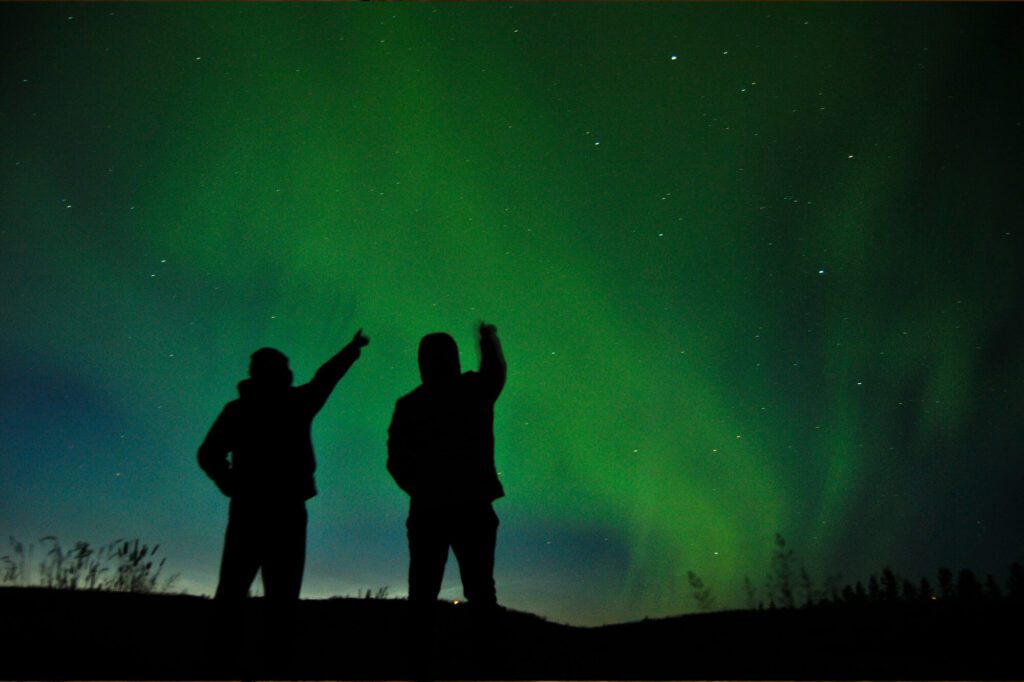
Experience the vibrance of Northern Lights over the Arctic Meridian

A Note from the Curator

Most journeys to the high north are defined by a fixed horizon. From the deck of a coastal liner or the window of a large tour bus, the traveller is often at the mercy of the immediate weather.

At Seagull, we prioritise the possibility of the lights through a principle of agility. We do not offer a sedentary wait for the elements; we hunt with intent. Our small-group size makes it possible to head into the countryside and move according to the weather, finding the clear windows of sky that give us the best realistic chance of a sighting.

Beyond the lights, we seek the specific quiet of the Arctic winter. We descend into the technical heart of the Kiruna mine; we explore the hand-carved art suites of the Icehotel, rebuilt from Torne River ice by international artists every winter and melted every spring; and we travel into the silence of the Norwegian fjords.

Elizabeth
Seagull Travel & Tours


The Journey at a Glance

Stockholm, 1 Night

Art Deco architecture, the medieval alleys of Gamla Stan, and a visit to the 17th-century warship Vasa, raised from the seabed after 333 years and preserved with startling detail.

Kiruna & Jukkasjärvi, 2 Nights

A technical descent into the earth at the Kiruna Mine, followed by a relaxed exploration of the hand-carved art suites at the original Icehotel in Jukkasjärvi.

Narvik, 1 Night

The town built to export Kiruna’s iron ore, and strategically important during the German occupation of Norway in 1940. The granite peaks of the Norwegian coast, with an optional visit to the Narvik War Museum.

Tromsø, 2 Nights

The cultural hub of the Norwegian Arctic. Private, specialist-led Aurora hunts using real-time weather data, including a dedicated six-hour Aurora chase on the final hunt night.

Oslo, 1 Night

A concluding walking tour of the capital’s architecture, with time at the Nobel Peace Centre.


Is This Journey Right for You?

The Mobility

This journey involves uneven, icy surfaces; boarding small sledges; and walking through historic city centres. It requires good general mobility, balance, and confidence on winter pavements.

The Climate

You will be outdoors in sub-zero temperatures for extended periods. Thermal outerwear is provided for specific outdoor activities, and all indoor spaces are centrally heated. Private transport is used for all transitions.

The Pace

This is not a rushed itinerary. We stay longer in key hubs so that the Aurora hunting can remain flexible and weather led.


Who Is This Journey Designed For?

This journey is designed for travellers who want more from the Arctic than a photograph of the lights. For those who enjoy good hotels, calm logistics, thoughtful pacing, and the quiet interest of a route that connects Stockholm, Kiruna, Narvik, Tromsø and Oslo.

It will suit travellers who are curious about the places in between: the iron ore beneath Kiruna, the wartime history of Narvik, the stillness of a birch forest, and the careful method required to pursue the Aurora properly. We prioritise a maximum group size of 16, weather-led movement, and hand-picked accommodation chosen for character as much as comfort.


What to Pack

Natural Underlayers

Woollen thermals are essential. Jeans are not recommended for outdoor activities, as they offer little insulation against Arctic cold.

Ice Grips

A pair of ice grips for your shoes is strongly recommended for navigating icy pavements.

Waterproof Footwear

Insulated, waterproof boots with good grip are essential.

Accessories

High-quality gloves, beanies, scarves or neck warmers, and woollen socks. Thermal outerwear is provided for specific outdoor activities.

Layering System

Rather than one heavy coat, pack layers that can be adjusted easily as you move between heated interiors, private transport, and outdoor winter conditions.


The Reading Room

A little context before departure deepens the experience.

To Read: Arctic Dreams by Barry Lopez

A foundational text for the northern latitudes. Lopez explores the landscape, the wildlife, and the history of human presence in the ice with a rare quality of observation. It is an invitation to see the Arctic not as a void, but as a place of immense detail and intelligence.

To Read: The Mercies by Kiran Millwood Hargrave

Set in 17th-century Vardø, on the northern edge of Norway. This is the story of a community of women surviving the aftermath of a catastrophic storm. It gives useful texture to the resilience required to live at the edge of the world, and to the layered history beneath the modern Norwegian surface.

To Watch: Sami Blood (Sameblod, 2016)

A Swedish film following a young Sami girl in the 1930s, forced to assimilate into Swedish society and away from her indigenous culture. Watching it before the Sami reindeer camp on Day 4 changes the texture of that visit, moving it from observation toward understanding.

To Watch: The 12th Man (Den 12. mann, 2017)

Based on the true story of Jan Baalsrud, a Norwegian resistance fighter who survived a winter escape through Arctic Norway after his unit was ambushed in 1943. The geography overlaps closely with the route of this journey. A study in endurance, landscape, and the specific quality of winter light in the far north.


Frequently Asked Questions

Are the Northern Lights guaranteed?

No. The Northern Lights are a natural phenomenon and cannot be guaranteed. What we can control is the structure of the journey: a small group, agile vehicles, real-time weather decisions, and three dedicated Aurora hunt nights, including a six-hour chase in Tromsø.

How cold will it be?

February is deep winter in the Arctic. Temperatures can be well below freezing, especially at night. The itinerary is designed around private transport, heated interiors, and thermal outerwear for specific outdoor activities, but guests must be comfortable spending time outside in sub-zero conditions.

How active is this journey?

The tour is moderate and active. You need good general mobility, balance on icy surfaces, and the ability to manage thermal clothing independently. It is not recommended for travellers who are unsteady on their feet.

How many people will be on the tour?

The group is capped at 16 travellers. This is not a marketing claim; it is the size at which the Aurora hunting, vehicle logistics, and group rhythm function properly.

How does tipping work?

We confirm the gratuity amount before departure and include it in your final travel documents, so there is no uncertainty on the journey. Your Seagull tour leader collects the amount at the start of the tour and manages gratuities for local guides, drivers, and relevant service staff on behalf of the group.

What is the difference between a Seagull tour leader and a local guide?

The Seagull tour leader manages the overall flow of the journey, group rhythm, and practical arrangements on the ground. Local guides are licensed professionals who provide historical and cultural expertise in each destination.

What currency should I bring?

Credit cards are widely accepted throughout Scandinavia and are the preferred method of payment for local spending. The Swedish Krona (SEK) and Norwegian Krone (NOK) are the local currencies. Please note that booking payments to Seagull are not accepted by credit card.

Can I join from outside Johannesburg?

Yes. The quoted airfare is based on Johannesburg, but we can advise on international join arrangements if you are travelling from another South African city or from outside South Africa.

Can South African expats join?

Yes. We coordinate international join arrangements for travellers meeting us from outside South Africa, including South Africans living in Namibia, Zimbabwe, the UK, Australia, Europe, or elsewhere.

Is the wolf visit included?

The Polar Park visit is included, but the Wolf Visit is optional and excluded from the land cost. Places in the wolf enclosure are limited to a small number of guests per session. If this experience matters to you, we suggest confirming it early.

Our approach

We care about our guests

Seagull Travel & Tours crafts small group tours that offer luxury, convenience, and spontaneous moments of joy.

Explore

Seagull travels around the world

Seagull curates and facilitates exceptional travel experiences to premium destinations worldwide.

FAQs

We are here to help

The tour leader collects a set amount from each member of a tour. This kitty is then used to tip the local tour guide and city guides, bus drivers, any other assistants, and restaurant staff. We believe in tipping for good service as a token of appreciation, especially as many workers in tourism rely on tips to supplement their income.

Although we cannot apply on your behalf, we are more than willing to give guidance and assistance with completing forms. We do this for many clients on a near-daily basis. It does, however, remain the responsibility of the client to ensure that they get the correct visa on time.

Remember that we limit the number of guests on our tours. This means more time at stops and sites. We definitely do not do groups of 30 pax, where guests are rushed from one site to the other. There is enough time to explore on your own.

We always suggest USD/Euro 50 to USD/Euro 100 per person per day. As we mostly include two meals per day on our tours, this will be enough for lunch/dinner, some snacks, and memento shopping. Should you want to buy larger items, we suggest taking along your credit card. Remember to advise the bank that you will be travelling.

Once you have completed the form, you will receive an email with the itinerary which includes pricing, inclusions and flight options.

You can contact us at info@seagulltours.co.za or +27 42 296 0475