Why this route
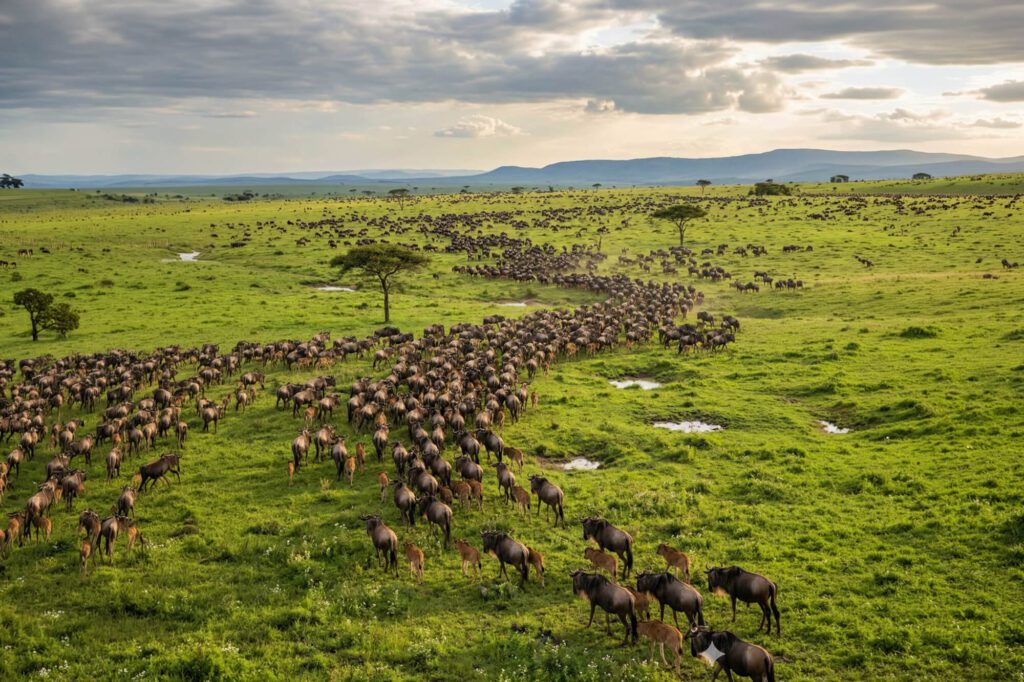
We have not included Lake Manyara simply because it is standard on the traditional northern circuit. Its character has changed significantly in recent years, and for this journey we believe the time is better used at Ndutu, where the group stays in the bush, close to the plains and seasonal movement of the Serengeti ecosystem.
The Reading Room
A little context before departure tends to make the experience richer. None of these are required, but they may help make sense of the places, landscapes and stories you encounter along the way.
To Read
The Serengeti Shall Not Die – Bernhard Grzimek
Part conservation story, part travel account. Written after extensive work in the Serengeti in the 1950s, this remains one of the most influential books ever written about East Africa’s great ecosystems.
West with the Night – Beryl Markham
A memoir set in East Africa by a bush pilot and horse trainer. The landscape she describes, the scale, the weather and the feeling of distance remain surprisingly recognisable today.
The White Masai – Corinne Hofmann
A personal and at times complicated account of life, relationships and cultural adjustment in East Africa. Not a guidebook, but an interesting perspective on a world many travellers become curious about.
To Watch
The Serengeti Rules (2018)
A thoughtful documentary exploring how ecosystems function and why balance matters. Useful background for understanding what is happening beyond individual sightings.
Serengeti – BBC Natural History Unit
A beautifully filmed series that follows individual animals across changing seasons. Particularly useful for understanding movement and behaviour before departure.
Is This Journey Right for You?
The Game Drives
Safari days begin early and often end with everyone suddenly remembering how hungry they are.
In the Serengeti, full-day game drives are normal and time in the vehicle forms part of the experience rather than simply transport. Expect long stretches of open plains, rough roads in places and periods of sitting quietly and observing.
There is very little structured walking, but guests should be comfortable getting in and out of a 4×4 vehicle and managing uneven ground around lodges and viewing areas.
The Climate
May sits at the end of the long rains.
The Serengeti is generally warm during the day, while mornings and evenings can feel surprisingly cool. Conditions change noticeably once the group reaches higher elevations around Ngorongoro.
Layers are strongly recommended and usually make the experience far more comfortable.
The Pace
Pole Pole means slowly, slowly.
That does not mean doing less.
It means allowing enough time for long sightings, unplanned moments and landscapes that reveal themselves gradually.
Park times and permits still shape the day, but once inside the reserves we remain flexible and adapt to weather, wildlife movement and what the guides are seeing.
Who Is This Journey Designed For?
This journey suits travellers who would rather spend longer in fewer places.
People who understand that some of the best sightings happen while looking for something else.
Guests who understand that safari is often at its best in quieter moments: waiting, watching and occasionally seeing something extraordinary.
It is particularly well suited to travellers who:
- enjoy small-group travel
- appreciate comfortable, characterful lodges over large busy properties
- are comfortable with early mornings and full safari days
- prefer depth over ticking off destinations
- want to experience the migration without the busier July and August period
We travel with a maximum of 12 guests and no more than six travellers per vehicle.
What to Pack
Neutral colours
Khaki, olive, stone and softer tones work well on safari. Bright colours and white can become impractical, and darker colours tend to attract tsetse flies during the day.
Layers for changing temperatures
Midday can become warm, while crater mornings are cold. Bring clothing that allows you to add and remove layers comfortably.
Sun protection
The East African sun is stronger than many travellers expect, even on overcast days. Sunscreen, sunglasses and a good hat make a noticeable difference.
Binoculars
Not essential, but one of the items guests most often wish they had packed.
Camera equipment
Entirely optional. Phones do surprisingly well. If you enjoy photography, a longer lens and a simple support can be useful.
Evening clothing
Lodges are relaxed. Comfortable, neat clothing is more useful than dressing up.
Malaria prophylaxis
Tanzania is a malaria area. Please speak to your GP or travel clinic before departure.
Frequently Asked Questions
Why is this safari priced higher than some Tanzania tours?
Because the difference is in the route, the lodge positioning and the included operating costs. This journey includes a bush-based overnight at Ndutu, three nights at Kubu Kubu in the Central Serengeti, selected drinks at Kubu Kubu, two vehicles with a maximum of six guests per vehicle, a Seagull tour leader, personally selected Tanzanian driver-guides, and the park and conservation fees required for the published route. It is not built to be the cheapest northern circuit safari. It is built to give better safari value.
Why does Ndutu matter?
Ndutu is not included as a passing stop. We stay there in the bush, close to the plains and woodland that make this area so rewarding during the migration season. It carries a different cost structure from more conventional lodge routing, but it is one of the choices that gives this safari its depth.
What does the migration look like in May?
The migration in May is not one dramatic event. Large herds are spread across the Southern and Central Serengeti, moving gradually in response to grazing and weather. It is less about waiting for a crossing and more about being inside a landscape that feels constantly alive.
Why are there two departure dates?
Both departures follow the same route and fall within the same migration window. The practical difference is usually timing rather than experience.
Can I extend to Zanzibar?
Yes. Many guests choose to add Zanzibar afterwards and we are happy to help plan that around your timing and budget.
Why only 12 travellers?
Because safari works differently at this size.
Smaller groups mean fewer vehicles, more flexibility, easier wildlife viewing and guides who get to know their travellers properly.
Do South African passport holders need a visa?
No. South African passport holders currently do not require a visa for Tanzania. Other nationalities should check entry requirements before booking.
What about malaria?
Tanzania is a malaria area. We recommend consulting a travel health clinic for advice appropriate to your circumstances.
How does tipping work?
Your tour leader collects a standard gratuity contribution at the beginning of the journey and manages tipping on behalf of the group.
Can I join from outside South Africa?
Yes. We regularly assist travellers joining from elsewhere and can advise on the most practical routing.
What is the hot air balloon option?
An optional balloon safari over the Central Serengeti can be booked in advance. Flights take place at sunrise and end with breakfast in the bush.
Is there a single supplement?
Yes. Please contact us for current pricing and availability, as single accommodation is limited.