This route begins in Barcelona, turns inland through Madrid, Toledo, Segovia and Salamanca, then crosses into Portugal, where the way we travel changes. At Pocinho we leave the road for the train into Pinhão; the next morning we see the Douro from the river before continuing to Porto and Lisbon.
High-speed rail across Spain, the older stone towns of the interior, a night in the Douro wine country and the final approach through walled Óbidos all form part of the route.
A Note from the Curator
When designing this route, I wanted to explore Spain and Portugal not as two separate countries, but as parts of a shared story shaped by centuries of culture, trade and tradition. Travelling across the Iberian Peninsula in this way reveals both the connections that unite these destinations and the distinct character of each region.
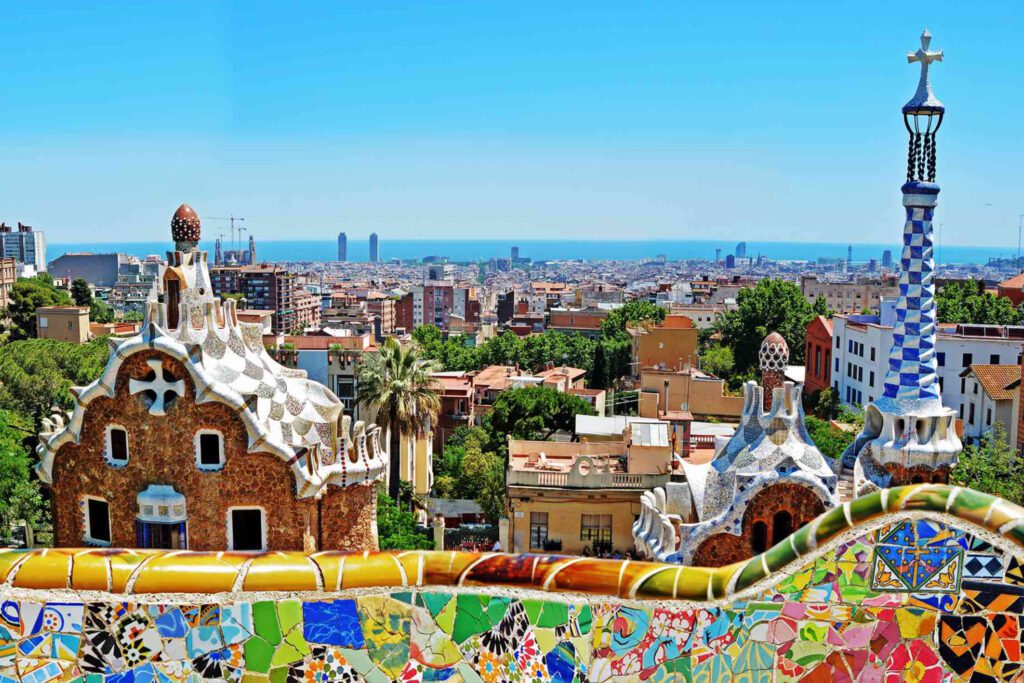
The tour begins among the vibrant streets of Barcelona and the grand avenues of Madrid, where remarkable architecture, rich history and local traditions bring Spain’s past and present vividly to life. From there, we travel through the historic towns of Toledo, Segovia and Salamanca, where cobbled streets, ancient monuments and local traditions provide a strong sense of place.
As the landscape changes, so does the pace. We cross into Portugal and the vineyard-clad Douro Valley invites a slower rhythm, with rail and river journeys revealing one of Europe’s most beautiful wine regions. Porto and Lisbon provide a memorable, maritime finale.
For me, the highlights are wonderfully varied: standing beneath the soaring towers of Gaudí’s Sagrada Família, wandering Toledo’s historic streets, watching the Douro Valley unfold beyond the window, soaking up the character of Porto’s colourful neighbourhoods and the passion of the Fado in Lisbon.
Is This Tour Right for You?
The Pace
This is a moving 14-day route with six hotel bases. Barcelona has three nights; Madrid, Porto and Lisbon have two each; Salamanca and Pinhão are one-night stays with a clear role in the route.
The Walking
There is real sightseeing on foot in historic centres. Expect cobbles, uneven paving, steps and periods of standing. It is not a hiking tour, but comfortable, well-worn walking shoes are essential.
The Free Time
Barcelona, Madrid, Porto and Lisbon all have independent time around the guided programme. The major cities are not programmed from morning to night.
The Way We Travel
The route uses coach, high-speed rail, regional rail and river boats. Clients should be comfortable with the movement that comes with a multi-city tour.
Who Is This Tour Designed For?
Spain and Portugal: Barcelona to Lisbon is designed for first-time visitors who want a strong introduction to both countries, and for travellers who have been before but have never seen how Barcelona, the Castilian interior and northern Portugal fit together.
It suits travellers interested in architecture, art, history, food and wine, who enjoy guided context with time afterwards to follow their own interests. Salamanca carries the route west across Spain; Pinhão changes the way we enter Portugal.
The tour will suit travellers who are comfortable changing hotels across six bases and who can manage regular sightseeing on foot.
What to Pack
Walking shoes
Comfortable, properly worn-in shoes are the most important item for the historic centres, steps and uneven paving.
Layers
May is generally mild, but evenings in the Spanish interior and the Douro can be cooler. A light layer is useful.
Practical travel information
A full packing list, final flight information and current entry guidance will be sent before departure.
The Reading Room
Ghosts of Spain: Travels Through Spain and Its Silent Past (Giles Tremlett, 2007). Part social history and part travelogue, this book gives a unique overview of Spain’s history and culture covering a wide range of topics.
Homage to Catalonia (George Orwell, 1938). Orwell writes a gripping account of his experiences in the Spanish Civil War. An all-time famous book about Barcelona; there is even a plaza named after Orwell in the heart of city.
The Shadow of the Wind (Carlos Ruiz Zafón, 2005). If you prefer fiction, this best-selling thriller is set in 1950s Barcelona; sequels include The Angel’s Game and The Prisoner of Heaven.
Queen of the Sea (Barry Hatton, 2018). A good choice if you are after a comprehensive guide to the 2,000-year history of Lisbon, from its Roman legacy to the charming capital it is today.
The High Mountains of Portugal (Yann Martel, 2016). A charming piece of historical fiction from the author of Life of Pi. A must-read, as it uniquely captures Portugal’s natural landscapes.
Frequently Asked Questions
How long is the Spain and Portugal tour?
Fourteen days, departing South Africa on 2 May 2027 and arriving home on 15 May. The tour includes 11 hotel nights and two overnight international flights.
What meals are included?
Eleven breakfasts, two lunches and three dinners. The full itinerary shows exactly where each included meal falls.
Does a Seagull tour leader travel with the group?
Yes. Your Seagull tour leader travels with the tour until the group returns home. Specialist local guides join where destination knowledge is required and a full-time guide travels with the group between Madrid and Lisbon.
How large is the group?
Maximum 16 travellers.
How much walking is involved?
There is regular sightseeing on foot, including cobbles, uneven paving, steps and periods of standing. Being able to comfortably walk at least 5 km per day will contribute to your enjoyment of the tour.
Why are Salamanca and Pinhão only one night each?
Salamanca carries the route west through the Spanish interior. Pinhão lets us enter the Douro by train, stay in the wine region and see the valley again from the river the following morning.
How do we travel between Barcelona and Madrid?
By high-speed train. The crossing takes about three hours.
What happens in the Douro Valley?
We travel by road to Pocinho, take the train into Pinhão, stay one night in the wine region and continue by river via Peso da Régua the following morning before travelling on to Porto.
Where do we stay?
We stay in centrally located properties or properties chosen specifically for their location in the countryside, to contribute to the experience.
What should I know about money, time and May weather?
The euro is used in both countries. Cards are widely accepted; a little cash is useful for markets and smaller cafés. Spain is on the same time as South Africa in May, while mainland Portugal is one hour behind. May is generally mild, with cooler evenings in the Spanish interior and the Douro.
What travel documents will I need?
You will need a passport valid for at least six months after return and with at least two consecutive empty pages. In addition, South African passport holders need a Schengen Visa.
Can I join from outside South Africa?
Absolutely. You are welcome to join us in Barcelona. We have many expats traveling with us.